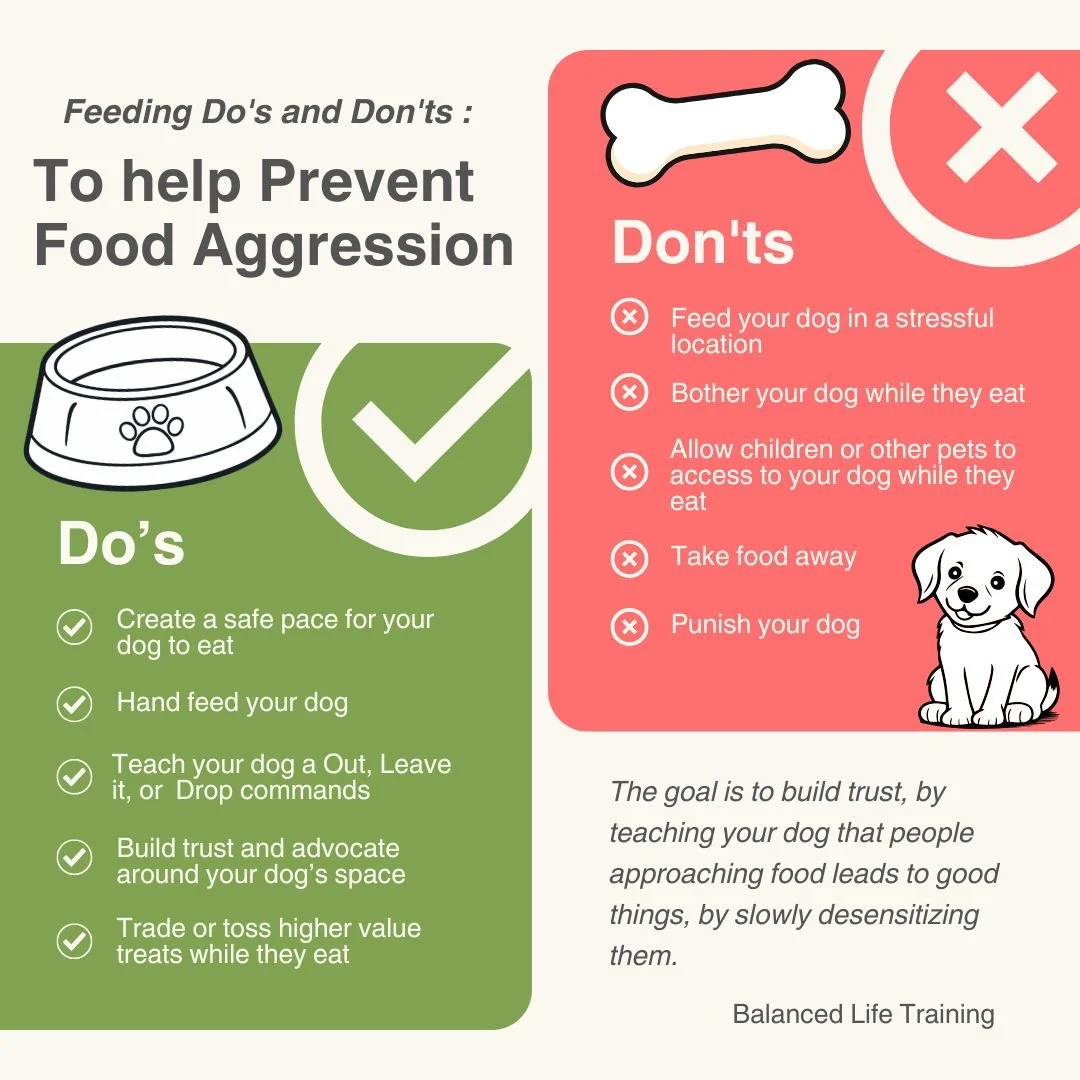
Do’s and Don’ts to help with Food Aggression
Lets talk Food Aggression: What it is and why does it happen?
Food aggression, or resource guarding, happens when a dog defensively protects its food (or other valued items toys, beds, or people which is a post for later) due to instinct, past scarcity, fear of loss, trauma, or lack of socialization, leading to growling or snapping when approached during meals, essentially telling others "don't take this from me". It's rooted in survival but becomes problematic in homes, often stemming from early life experiences like hunger, competition, or stress, creating a threat around their valuable food source.
Causes of Food Aggression
Instinct: Natural urge to protect food for survival, seen in wild animals.
Past experiences: Hunger, irregular feeding, or being bullied while eating causes fear and guarding.Fear & anxiety: Feeling threatened when people or other pets come near their bowl.
Genetics: Some breeds are more likely to guard.
Lack of socialization: Poor early experiences or training create insecurity.
Medical issues: Pain or discomfort while eating can make a dog defensive.
How It Develops
Trigger: Another person or animal comes near while the dog eats..
Signal: The dog shows warning signs like freezing, staring, growling, or snarling — its way of saying "back off."
Escalation (If Ignored): If the person keeps getting close, the dog may start snapping, lunging, or biting to guard its resource.
Learned Behavior: Dogs learn that growling or guarding keeps their food, so the behavior repeats.
Understanding the Behavior
It's Natural: Food guarding is an instinctual behavior, not necessarily "bad" behavior, but it can be dangerous.
Growling is a Warning: A growl is a vital communication signal that says "I'm uncomfortable," and should be respected, not punished.
Signs: Look for stiff body, lowered head, visible whites of eyes (whale eye), or raised hackles, as these indicate fear or possessiveness.
Management & Prevention (Immediate Steps)
Keep your dog’s feeding area separate and safe (crate, room, or behind a gate). Teach kids to never go near a dog while it’s eating or guarding food and never snatch food away. Use high-value treats from a distance to build positive feelings. This instinct can be dangerous if ignored.
Separate Feeding: Feed your dog in a crate, separate room, or behind a baby gate to keep children and other pets completely away.
No Interruptions: Never try to take food, treats, or chews away from a dog that is eating; this can trigger bites.
Teach Children: Instruct children to stay far away from a dog when it's eating, sleeping, or has a valued item.
Pick Up Bowls: Remove food bowls immediately after your dog finishes eating so they aren't left out to guard.
Training & Desensitization (Longer-Term)
Positive Association: From a safe distance, toss high-value treats (like small bits of chicken) into the food bowl as you pass by to teach your dog that your presence means good things.
Controlled Trades: When giving high-value chews, have your dog in their safe space, and practice trading for something even better (like a treat) to build trust.
Incorporate Commands: Hand-feeding helps reduce food aggression by teaching a dog to see your hands as safe and you as the food giver. Give kibble one piece at a time from your palm, ask for simple commands (sit, down or play training games). After a few days start reducing the amount hand-fed and gradually reintroduce the bowl
Never use force or punishment: Don’t physically punish or dominate a dog that guards food. That will make the dog more fearful and link people with danger over food, which worsens the aggression and makes it more dangerous.
Professional Help: This should never be taken lightly, even if your dog is only showing moderate signs (snapping, lunging) or if you’re unsure how to respond. Food aggression whether moderate or severe, requires you to seek professional help quickly. Reach out to a experienced trainer or your veterinarian. Resource guarding can pose real safety risks and should be addressed without delay.